|
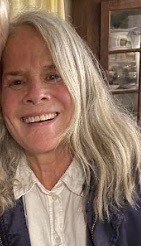 As long as
I can remember I have been a collector of things. Wherever I am—walking
in a field, on a street, by a river or by the ocean, traveling
here or abroad, visiting dumps or working as a gatekeeper at my
local landfill—I have found objects that were discarded by
others but have an intrinsic beauty or value to me. As long as
I can remember I have been a collector of things. Wherever I am—walking
in a field, on a street, by a river or by the ocean, traveling
here or abroad, visiting dumps or working as a gatekeeper at my
local landfill—I have found objects that were discarded by
others but have an intrinsic beauty or value to me.
Although these materials are very diverse, they
share in common a beautiful patina, soft edges, and worn surfaces.
Some of the wood and metal which I incorporate into my artwork
reveals layers of paint worn through by generations of use.
Over the years, I have accumulated so many objects
that I have a vast library of material to draw from for my sculptural
pieces.
My current work incorporates many years of influence
from my past work and from other artists. Joseph Cornell, the
master, and my dear friend and mentor Varujan Boghosian were my
introduction to assemblages.
In my teens I attended The Putney School where I
spent much of my time training in metalwork, sculpture, and two-dimensional
design, such as silk-screening repeated patterns on fabric. After
high school I designed, fabricated and sold jewelry.
I later enrolled in an intensive course at Penland
School of Crafts in metalwork and jewelry design. There I was
introduced to knifemaking, which intrigued me because it involved
sculptural form in three different media--hard steel, soft brass,
and wood.
I attended Rhode Island School of Design from 1978
to 1982 where I continued my metalwork education, transferring
after two years into the Textile Design program and specializing
in surface design.
Through the years, I have worked with hard and soft,
metal and textiles, sculptural forms and surface details. My current
work is an attempt to fuse these diverse materials and approaches
together harmoniously.
|
| |
|
Show information
Solo Exhibitions
Assemblages, Gallery One, "A Candle
in The Night," 181 Main Street, Brattleboro, VT 05301, October
2012
"Abby Rieser Assemblages," Sticks and Bricks Gallery,
9 Market Street, Northampton, MA. 01060, May, 2012
"Alumni Show," The Michael Currier Gallery, Putney
School, Elm Lea Farm, Putney, VT. 05346, June, 2010
"Sculptural Assemblages," Gallery One, "A Candle
in The Night," September, 2008
Group Exhibitions
The Oxbow Gallery, 273 Pleasant Street, Northampton,
MA 01060, June 2 - June 26, Opening 5-8pm, June 10th, 2016
"EcoCreations5," The Muse Gallery, 356 Main Street,
Longmont, CO 80501. March 14 - April 28, 2014
"Material Culture", 4700 Wissahickon Avenue, Philadelphia,
Pennsylvania 19144. July 1st - August 2012.
"After Dark", The Greg Moon Art Gallery, 109A
Kit Carson Road, Taos, NM 87571. 7/7/2012 - 7/28/2012
"Chelsea International Fine Art Competition Exhibition,"
Agora Gallery, 530 West 25th Street, Chelsea, NYC. August
24th, 2012 - September 12th, 2012.
"Women's Work," Old Court House Arts Center,
Box 597, Crystal Lake, IL 60039. March-April, 2012
"Spare Parts," The Renaissance Center, 855 Highway
46, South Dickson, TN 37055, Feb - March 2011
"Mixed Media", The Brill Gallery, Studio 109,Eclipse
Mill, 243 Union Street, North Adams MA, 01247-0786, June 2010-October
2010
"Six Studios," Stephen Score Gallery, 73 Chestnut
Street, Boston, MA. 02108, June, 2010
The Bing Gallery, The Bing Arts Center, 716 Sumner Avenue,
Springfield, MA. 01138, April - September 2010
"Recycled Art Show," The Garbage Museum, 1410
Honeyspot Road ext., Stratford, CT. 06614, April - May 2010
"Holiday show," BigTown Gallery, 99 North Main
Street, Rochester, VT. 05767, 11/ 2009 - 2/ 2010
"Trio," The Cell Theater, 338 W. 23rd St. NY,
May 2009
"Re-paired," Pinch, 179 Main St. Northampton,
MA. June 2009
"The Silo Gallery," Hunt Hill Farm Trust, 44
Upland Road, New Milford, CT. 06776 August 2009
|
| |
|
Putney Post Spring Edition 2015
Click
here for the full article
|
| |
|
“5 Vermont Artists: Sculpture and Assemblages”
Material Culture Philadelphia, PA 6/30/2012
materialculture.com/5-vermont-artists/
|
| |
|
Reusing is better than Recycling – the work
of Abby Rieser
By Karin Maraney
Abby Rieser is one of the artists whose work was
selected by an independent juror to be included in the 2012 Chelsea
International Fine Art Competition Exhibition at Agora Gallery.
Here, she shares the method behind her intriguing creations –
and demonstrates how valuable working at a landfill can be to
an artist!
Click
here for the full article
|
| |
|
Recycling the focus of Northampton art exhibit
By BRENDAN HELLWEG
Gazette Contributing Writer
Thursday, August 30, 2012
NORTHAMPTON - Local artists will have a chance to
do their part in keeping a little bit more trash out of landfills
this fall with the Northampton Department of Public Works' recycled
art initiative, which challenges artisans to create pieces using
at least 75 percent post-consumer materials.
Artists who participate will be invited to show
and sell their "recycled" work in an exhibition at JFK
Middle School on Oct. 13. The ReUse and Recycle Rally for the
Arts is funded by a $10,000 grant from the state Department of
Environmental Protection, covering a mailing for future events
and the purchase of recycling boxes, vests for volunteers and
event signs.
The initiative seeks to make the public more aware
of local and national recycling efforts. In 2010, about 85 million
tons of material were recycled in the United States, accounting
for 34.1 percent of the total waste output, according to the Environmental
Protection Agency.
The exhibit asks the public to contribute recycled
items for artists' creations, including textiles, stencils, natural
materials such as sea glass and feathers, and paper products.
Artists also can create a wish list of post-consumer material
that they would like people to bring to the event for future projects.
"There's one artist who just wants people to
bring in toilet paper rolls," said Karen Bouquillion, Northampton's
waste management supervisor and the co-creator of the art event.
"Everyone has those, right?"
Exhibiting outside the JFK showroom, Leverett artist
and Smith College Campus School arts teacher Robert Hepner will
show his modified 1955 Chevrolet 6400 pickup truck, decked out
with a yellow skateboard ramp-like bed and a carnival style roof
reminiscent of "a giant puppet theater" with red streamers
and a bright pastel paint job. Hepner bought the truck from a
college student who planned on restoring the old farm truck but
failed, and when Hepner bought it, the flatbed was mostly rotten
and "old receipts for fertilizer were still in the ashtray,"
he said. The restoration turned into a total remodeling, and he
now shows the truck, complete with moving sculptures that dance
to music, to his sixth-grade students every year and at area events.
About two-thirds of the materials he uses for the
truck are recycled, but he plans on making several additions to
the design, using only reused material specifically for this event.
"I'm not a hard-core recycler," he said,
but, "I'm really fond of rehabilitating old things."
He said he loves that the materials "had a life before and
all the graces of a life before."
For the artists, the event will serve as free publicity
and a place to ply their trade. The level of notoriety of each
artist will vary vastly at the event, Bouquillion said. Some artists
regularly sell works for thousands of dollars while others only
make a couple of dollars from each piece.
One artist, Abby Rieser, was recently invited to
an international showing in New York City at the Agora Gallery.
Her style of art, called assemblage, involves "taking many
different mediums and putting them together into something that
is pleasing to the eye," she said. The style fits well with
the message of the Rally for the Arts, especially since Rieser
gets about 90 percent of her material from the Northampton Regional
Landfill, where she has worked part-time for the last nine years.
She usually sells her artwork for anywhere between $1,200 and
$2,800. Recycled art to her is an example of how much "people
can do with what the general public thought was useless and threw
away," she says.
To fit in with the environmentally friendly goals
of the exhibition, the JFK Middle School PTO will collect electronics,
VHS tapes, DVDs, cassette tapes and "basically anything with
a power cord," said Bouquillion. The PTO will also accept
Styrofoam of all shapes and sizes. Both services will cost a small
fee and will raise funds for the PTO, though electronic items
such as the CDs, DVDs and VHS tapes will be accepted free of charge.
Creating a singular work of art out of many pieces
of refuse is a challenge, but one that is taken with zeal by artists.
"I'm really fascinated by the structure and
strength of things and all the ways you can make them to be three-dimensional
and new," Hepner said. "It's like solving a puzzle."
|
| |
|
NYC ART
Review by Christopher Rywalt May 28 2009
One last show. Remember earlier in the essay I said
I firmly believe in serendipity? This is why. Following my feet
I wound up walking along West 23rd thinking only to head back
to the subway. I don't usually take 23rd because it's crowded
and noisy and not, usually, especially interesting. But this time
as I walked something on a building across the way caught my eye.
It was a sculpture of a man leaping out of a window.
It's one of those reverse sculpts -- where the shape is concave
instead of convex, curving inward and away from the viewer instead
of outward and toward. You might have learned at a science museum
that this creates a neat optical illusion such that the object
appears to track your eyes as you move around it. It's very groovy.
I was fascinated enough to take a couple of pictures. There I
go, pretending to be a photojournalist again.
It turns out this is Falling Man by Craig Kraft
Studio. But I didn't know that. All I knew is I wanted to know
what the heck it was and why it was there. So I crossed the street
and found the Cell Theatre which, it just so happened, was hosting
an art opening in the lobby. It was Trio showing work by Alison
Ives, Abby Rieser, and Shelley Rotner (until June 2, 2009).
At first glance Abby's sculptures may look like
a thousand other found art assemblages you've seen. But they're
not. In person, they immediately reach out to your heart. They
are soaked in wistful nostalgia, the sense of life's passing,
the brief moments of love and happiness with which we're all blessed
from time to time. They have an ache and an inner smile, a wisdom
and a beauty. Completely devoid of irony or detachment they touch
something deep inside you.
Abby Rieser's works are absolutely lovely.
I really wanted to tell her so while I was there.
I paced around looking for anyone who looked authoritative enough
to tell me who she was, but I couldn't find anyone. There were
enough people around -- even in the theater's lovely little urban
back yard -- but no one who seemed like an owner or person in
charge or otherwise botherable with dopey questions like the one
I had. I left without finding Abby.
What I wanted to say to her was this: You're doing
something very special here. It looks easy but it's not. Hundreds
of artists attempt this kind of thing, taking old bits and pieces,
flotsam and jetsam of people's lives, and putting them together
in supposedly evocative ways. Almost all of them fail. Almost
all of them somehow manage to make objects less than the sum of
their parts; what I'm saying is, if you found, say, a piece of
wood or a spigot knob on the curb or in the gutter all by itself,
it would likely be a more interesting and entertaining object
just like that than after being incorporated into one of those
found art sculptures. But you, Abby: You have a gift. You've done
something magical and, like all great artists, you've made it
look easy. But it's not easy, not at all.
Abby, please keep making these.
And that, friends in art, is why I wander. I suffer
through the fools and knaves, agonize through the Mark Floods
and the Kim Dorlands, fall unconscious at the Jamie Clydes, froth
at the mouth over the Violet Hopkins; I go through all of that
because out there, sometimes, when I'm very lucky, I find Abby
Rieser.
And then it's all okay.
|
|